

1. Battery Innovation Is Entering a New Era of Testing Challenges
The global battery industry is entering a new stage of technological evolution, driven by the rapid growth of electric vehicles (EV), energy storage systems (ESS), fast-charging technologies, and next-generation battery chemistries.
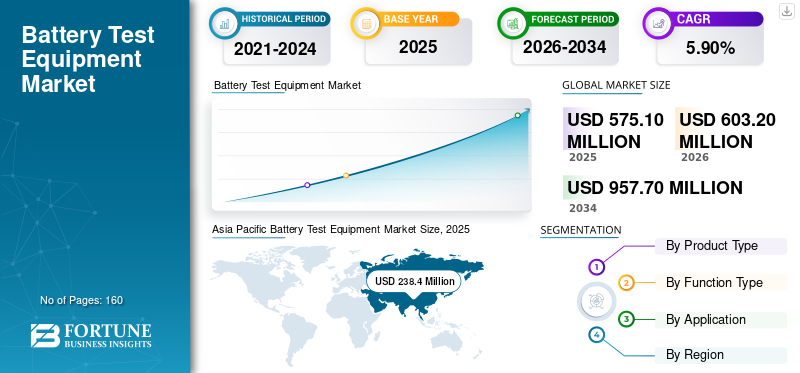
According to industry forecasts, global EV battery deployment reached approximately 1.2 TWh in 2025, growing nearly 30% year-over-year, and is expected to continue expanding toward multi-terawatt-hour scale demand in the coming decade. Meanwhile, the global battery testing equipment market is projected to grow from approximately USD 603 million in 2026 to USD 958 million by 2034, driven by increasing demand for advanced battery validation and safety testing.
As batteries evolve toward higher energy density, faster charging, and longer lifespan, more advanced testing capabilities are required to accurately evaluate battery performance, reliability, and behavior under complex operating conditions.
2.Why Battery Testing Technology Must Evolve Alongside Battery Innovation?
In the past, conventional battery testing systems were sufficient for basic charge-discharge cycling, capacity evaluation, and lifetime testing. However, with the rapid development of electric vehicles (EV), energy storage systems (ESS), and next- generation battery technologies, batteries are evolving toward higher energy density, higher C-rate capability, faster charging performance, and longer cycle life, creating increasingly complex testing requirements.
Next-generation battery development requires testing platforms that deliver:
- Higher measurement accuracy
- Faster dynamic response
- Higher-speed data acquisition
- Improved long-term stability and measurement consistency
Accurate battery evaluation requires fast dynamic response, high-speed data acquisition, and measurement stability.Leading battery manufacturers are therefore adopting intelligent, high-precision testing platforms to accelerate innovation in next-generation batteries.
3.How Advanced Battery Testing Systems Accelerate Battery R&D and Validation?
Battery testing is more than cycling. Advanced battery testing systems help engineers gain deeper insights into battery behavior and accelerate innovation.
3.1Early Detection of Battery Performance Changes
High-precision testing systems capture critical changes during battery operation, including:
- Voltage variations
- Internal resistance growth
- Capacity degradation
- Abnormal cycling behavior
These insights enable earlier issue detection and support faster material optimization and cell design improvements.
3.2 Accelerating Battery Development and Validation
Next-generation battery development requires extensive testing and validation.
Advanced high-dynamic testing platforms help to:
- Improve data reliability
- Reduce repeated testing
- Shorten validation cycles
- Increase R&D efficiency
These capabilities enable a faster transition from laboratory research to commercial applications.
3. 3 Supporting Large-Scale Battery Testing
With growing demand for high-power and high-energy batteries, testing platforms must deliver accuracy, speed, and scalability.
Advanced systems provide:
- High-speed data acquisition
- Multi-channel synchronized testing
- Modular scalability
Supporting cell development, performance validation, and large-scale testing requirements.
3.4 Building the Data Foundation for Intelligent Battery Development
Future battery innovation will increasingly rely on:
- State of Health (SOH) prediction
- Battery lifetime modeling
- Digital twins
- AI-driven performance analysis
Accurate, consistent, and reliable testing data is the foundation for intelligent battery development.
4.Why High-Dynamic Battery Testing Matters for Advanced Battery Development?
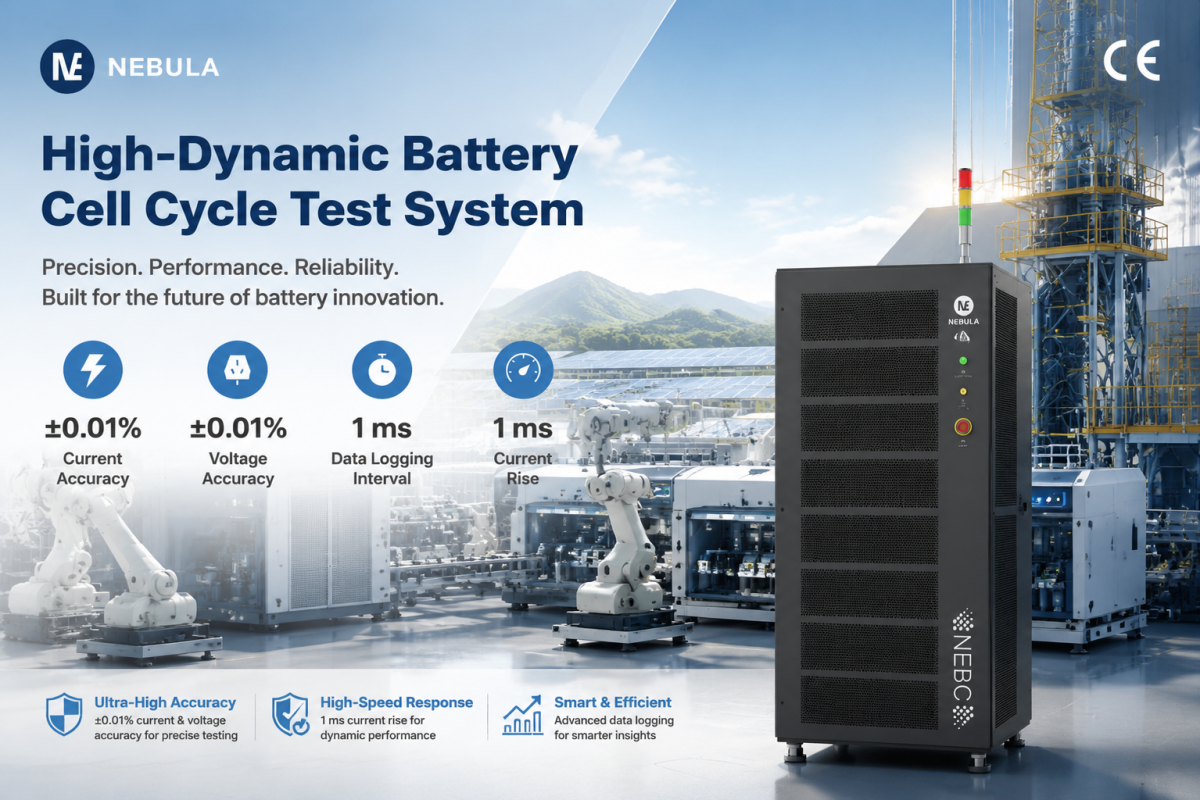
To address the growing demands of next-generation battery development, Nebula High-Dynamic Battery Cell Cycle Test System combines high measurement accuracy, ultra-fast dynamic response, and high-speed data acquisition to deliver more reliable battery insights.
The system features:
- Voltage Accuracy: ±0.01% F.S.
- Current Accuracy: ±0.01% F.S.
- Current Rise Time: ≤1 ms
- Data Logging Interval : 1 ms
These capabilities enable accurate battery behavior analysis across HPPC, pulse testing, fast charging, and life cycle evaluation. Integrated ripple injection and scalable current capability up to 9600 A enable precise high C-rate testing and advanced battery validation for next-generation energy applications.
5.Battery Testing Capability: A New Competitive Advantage in the Battery Industry
The future of battery innovation will depend not only on developing better batteries, but also on understanding them better. Advanced testing capabilities are becoming a strategic advantage across the battery value chain- from R&D and manufacturing to life cycle optimization.
Leveraging over 20 years of expertise in battery testing, Nebula delivers comprehensive battery testing solutions that accelerate battery development and enable a more reliable energy future.
More infos, please contact:
Web: http://www.nebulaate.com/
Mail: market@e-nebula.com
#NebulaElectronics #BatteryTesting #ChargeDischargeTest #BatteryModuleTesting #EnergyStorage #EV #TestingSolutions #SmartEnergy #BatteryTechnology#BatteryInnovation#BatteryDevelopment
Post time: Jul-27-2026