

As global electrification accelerates, battery safety, reliability, and compliance have become critical requirements for battery manufacturers, OEMs, and testing laboratories worldwide. Among international safety certifications, UL certification is widely recognized as one of the most stringent and authoritative standards for electrical and electronic equipment, especially in the North American market.
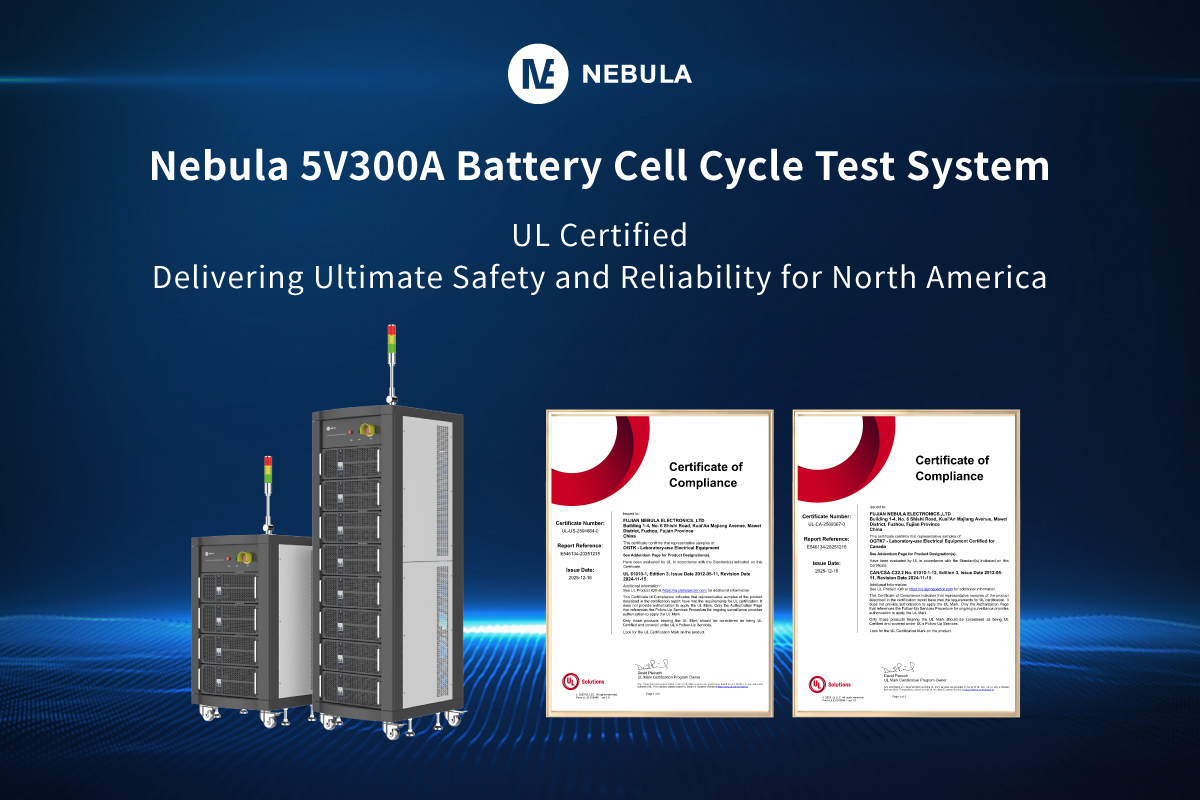
Recently, Nebula’s Cell Cycle Test System (Voltage:5/6/7/10V; Current: 100A- 4800A) successfully achieved UL certification, marking a significant milestone in the development of high-end battery testing technologies.
1. What Is UL Certification for Battery Test Systems?
UL Certification is a globally recognized safety certification system developed by Underwriters Laboratories (UL). It evaluates electrical and electronic equipment based on comprehensive requirements for safety, reliability, and compliance.
For battery test systems, UL Certification verifies that equipment meets strict standards in electrical safety, mechanical design, thermal management, and system reliability.
2. What Are Common UL Certification Standards?
UL standards define requirements for electrical safety, mechanical integrity, thermal performance, and system reliability. UL Certification for battery test systems typically involves multiple UL standards, depending on system architecture, application scenarios, and regional regulations.
2.1 UL 61010 Series – Core Safety Standards for Electrical Equipment
UL 61010 is one of the most important safety standards for laboratory-use electrical equipment, measurement instruments, and industrial testing systems.
UL 61010-1 Safety requirements for electrical equipment for measurement, control, and laboratory use.
UL 61010-2-030 / UL 61010-2-032 / UL 61010-2-034 Particular requirements for testing and measuring circuits, including high-voltage and high-current systems.
Application Scope:
- Battery test systems
- Measurement instruments
- Power supplies and test equipment
Key Requirements:
- Electrical insulation and dielectric strength
- Protection against electric shock
- Grounding and leakage current limits
- Over-current and short-circuit protection
- Mechanical safety and enclosure requirements
- Thermal safety and fire prevention
This is the core UL standard for battery testing equipment.
2.2 CSA / CAN Standards – Canadian Safety Standards
CAN/CSA-C22.2 No. 61010-1-12 is a mandatory safety standard for the legal installation and operation of laboratory-use electrical equipment in Canadian laboratories and industrial facilities.It applies to equipment used for measurement, control, and testing in professional, industrial, and R&D environments across Canada.
Application Scope:
- Battery charge-discharge test systems
- Battery testing equipment
- Electrical measurement and test instruments
Key Requirements
- Electrical safety: insulation, grounding, leakage current limits, and fault protection
- Mechanical safety: enclosure integrity and protection against hazards
- Thermal safety: temperature rise limits and thermal protection mechanisms
- Abnormal operation safety: safe behavior under overload and fault conditions
- Marking & documentation: clear safety labels and operating instructions
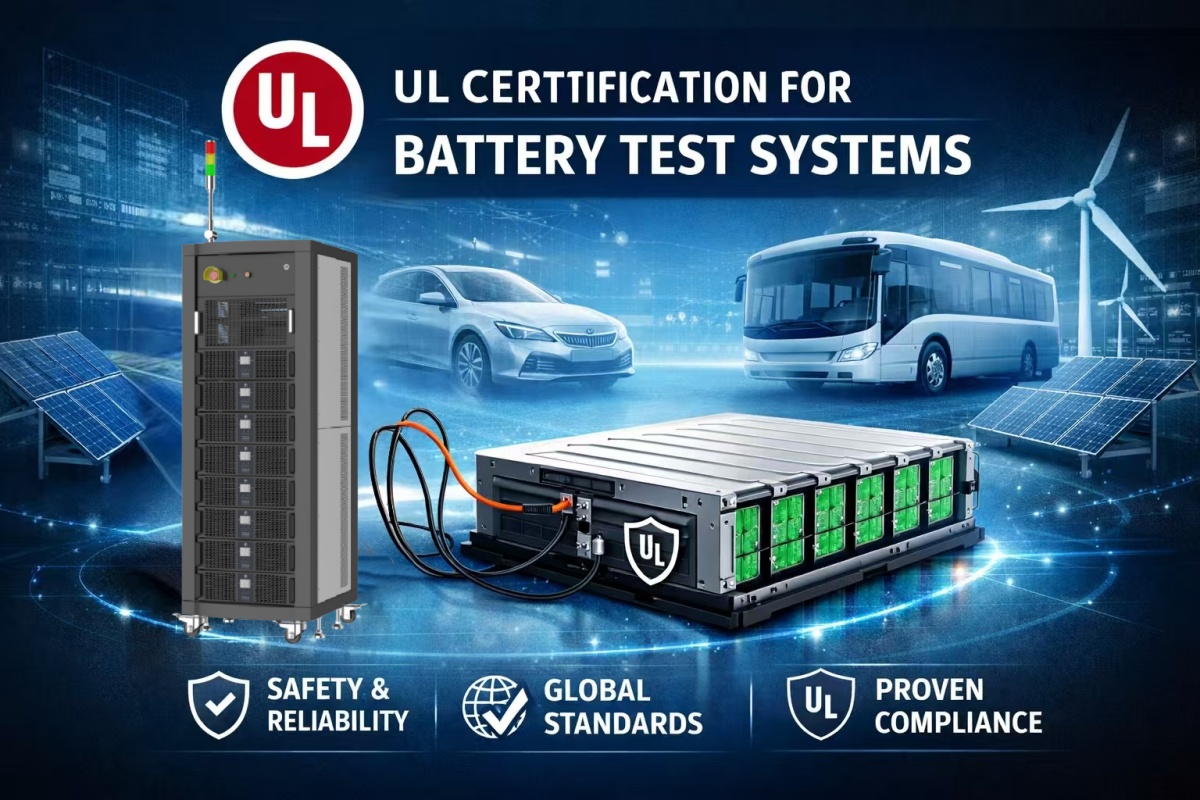
3. What Does UL Certification Cover for Battery Test Systems?
UL certification evaluates battery test systems across multiple dimensions to ensure safe, reliable, and compliant operation in industrial and laboratory environments.
3.1 Electrical Safety Requirements
Electrical safety is the core focus of UL certification. Key evaluation areas include:
- Insulation coordination and dielectric strength
- Leakage current and grounding protection
- Overcurrent, overvoltage, and short-circuit protection
- Power supply stability and fault tolerance
- Safety design for high-current and high-voltage circuits
For high-power battery test systems, UL standards require rigorous validation under extreme operating conditions.
3.2 Mechanical and Structural Safety
UL certification also assesses mechanical design and structural integrity, including:
- Enclosure strength and stability·
- Protection against mechanical hazards·
- Cable routing and connector reliability·
- Prevention of accidental contact with live parts
These requirements are essential for battery test equipment deployed in R&D labs and production lines.
3.3 Thermal Management and Fire Safety
Battery testing systems often operate under high load conditions, making thermal safety a key evaluation focus:
- Temperature rise limits during continuous operation·
- Cooling system performance
- Fire-resistant materials and flame-retardant components
- Thermal protection and emergency shutdown mechanisms
UL testing simulates extreme scenarios to verify system stability and safety margins.
3.4 Environmental Adaptability and Reliability
UL certification verifies equipment performance under diverse environmental conditions:
- Operation under varying temperature and humidity
- Resistance to vibration and mechanical shock
- Long-term reliability and aging tests
These evaluations ensure stable performance of systems such as Nebula’s Cell Cycle Test System in global industrial environments.
3.5 Functional Safety and System Reliability
Beyond hardware safety, UL certification assesses system-level reliability, including:
- Control system stability and redundancy
- Software and firmware reliability
- Fault inspection, alarms, and safety interlocks·
- Emergency stop mechanisms
This comprehensive evaluation ensures that battery test systems meet global expectations for industrial-grade safety and reliability.
4. Why Does UL Certification Matter for Battery Test Systems?
UL Certification is a key safety and compliance standard for battery test systems and battery testing equipment, especially in the North American market.
UL Certification is critical for battery test systems:
4.1 Enables market access in North America UL Certification is often a prerequisite for deploying battery test systems in OEM projects and industrial applications.
4.2 Verifies compliance with international safety standards UL Certification confirms that battery test systems meet strict requirements in electrical safety, thermal protection, mechanical design, and system reliability.
4.3 Builds trust with global battery manufacturers and OEMs UL-certified battery testing equipment demonstrates advanced safety performance, quality, and engineering capability.
4.4 Enhances competitiveness in global supply chains UL Certification helps battery test systems integrate into high-end international markets and global supply chains.
4.5 Reduces compliance and operational risks UL-certified systems minimize safety risks and regulatory barriers in global deployment.
With UL Certification, battery test systems achieve higher global acceptance, reliability, and market value.
5. Nebula’s Cell Cycle Test System: UL Certified Industry Benchmark
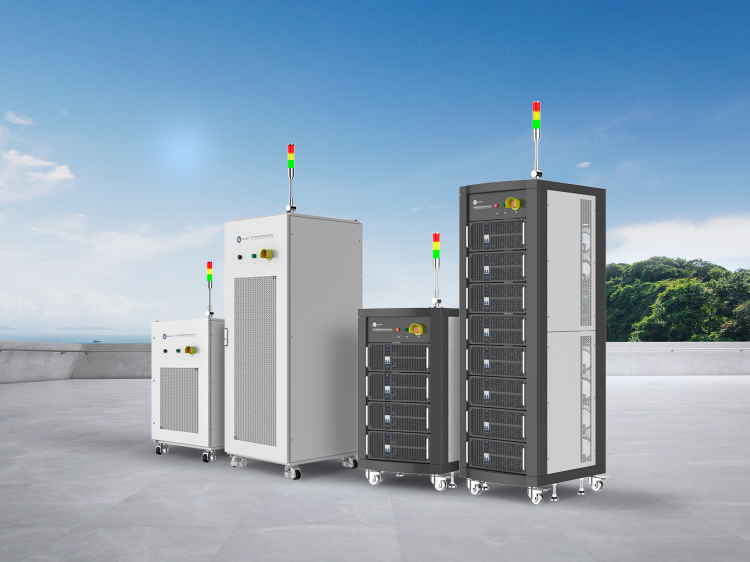
Nebula’s Cell Cycle Test System (Voltage:5/6/7/10V; Current:100A-4800A) has successfully achieved UL certification, Nebula is currently the first batch of battery testing enterprise in China to obtain UL certification for cell-level battery test systems.
This milestone reflects Nebula’s long-term commitment to engineering excellence, product safety, and global compliance.
Nebula’s Cell Cycle Test System Key Features:
- Ultra-fast 2 ms current rise time
- 10 ms dynamic driving profile simulation
- ±0.03% F.S. high-current accuracy
- Scalable & modular architecture up to 4,800 A
Designed for industry-leading safety, accuracy, and performance, the system supports comprehensive testing across R&D, production, and quality validation stages.
6. Nebula’s Vision: Global Standards, Global Safety, Global Battery Testing
With UL Certification, Nebula’s solutions meet rigorous international requirements for safety, reliability, and regulatory compliance. Backed by a localized presence in North America, Nebula is well positioned to support customers in accelerating innovation, strengthening battery safety, and advancing next-generation energy technologies.
Nebula remains committed to continuous innovation in battery testing and global compliance, delivering safe, reliable, and future-ready solutions that support the evolving needs of the global new energy industry.
For more information, please contact:
Mail: market@e-nebula.com
#NebulaElectronics #ULCertification #BatteryTestSystem #BatteryTech #CycleTestSystem #BatteryChargeDischargeTest #BatterySafetyStandards #NorthAmericanMarket
Post time: Feb-03-2026